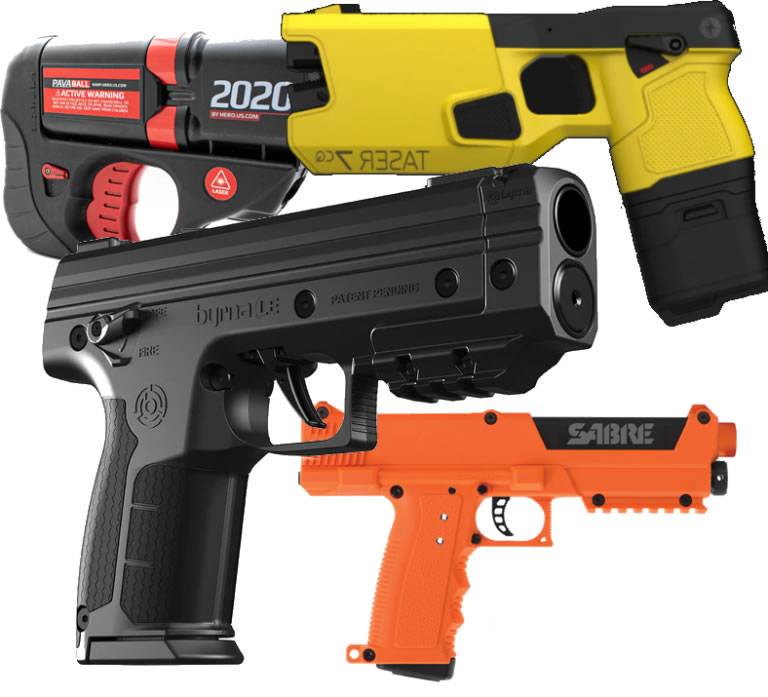
Here is the short answer. The SABRE pepper projectile launcher is legal to own in most of the United States, and federally it is not classified as a firearm. Two states, California and New York, currently restrict the pepper projectiles it fires. And no matter where you live, the rules on how you may buy, carry, and use it vary by state and even by city.
That is the honest version. The longer version matters, because “legal” is not a single yes or no for this kind of tool. It depends on which part of the system you are asking about, where you live, and what you plan to do with it.
This page walks through how the law actually works for the SABRE launcher, which states clearly restrict it, and how to confirm the rules for your own location. One thing up front, and we will repeat it, because it matters: this is general information, not legal advice. Laws change, they vary locally, and only a qualified attorney in your state can tell you what applies to your exact situation.
Why “Legal” Is Complicated for the SABRE Launcher
Most people want a simple answer. Is it legal, yes or no. The problem is that a pepper projectile launcher sits across several different areas of law at once, and each one can have a different answer.
Federal Law vs State Law vs Local Law
Three layers of law apply to this tool, and they do not always agree.
- Federal law determines whether the device is a firearm. For the SABRE launcher, it is not. The ATF does not classify a CO2-powered pepper projectile launcher as a firearm, so no federal firearms rules, background checks, or licenses apply to buying one.
- State law determines whether you can own, buy, carry, and use it within that state. This is where the real restrictions live, and it varies widely.
- Local law, meaning city or county ordinances, can add further restrictions on top of state law. A device legal statewide may face extra rules in a specific city.
The single most common mistake is assuming that “not a firearm federally” means “unregulated everywhere.” It does not. Federal classification is only the first layer. Your state and your city get the final say.
The Four Parts You Have to Consider Separately
This is the distinction almost every quick answer online misses, and it is the key to understanding launcher law. A pepper projectile system is not one legal object. It is several, and they can be regulated differently.
- The launcher body: The device itself, without ammunition. Often treated differently from what it fires.
- The pepper projectiles: Rounds filled with pepper or chemical irritant. These are the most heavily regulated part, because some states classify them as a form of tear gas.
- The kinetic or impact projectiles: Solid rubber or hard rounds with no chemical payload. These are frequently allowed where pepper rounds are not.
- The inert practice projectiles: Training rounds with nothing in them. Least regulated of all.
Why this matters: in a state that restricts pepper projectiles, you might still legally own the launcher body and use it with kinetic or inert rounds. The ban often targets the chemical projectile specifically, not the whole system. So the real question is rarely “is the SABRE gun legal,” but “which parts of the SABRE system are legal where I live.”
Purchase vs Possession vs Carry vs Transport vs Use
Even within one state, the law can treat these five activities differently.
- Purchase: Whether you can buy it, and whether the sale must be in person or can ship to you.
- Possession: Whether you can legally own and keep it at home.
- Carry: Whether you can carry it on your person in public, and whether concealed carry is treated differently.
- Transport: Whether and how you can move it, for example in a vehicle.
- Use: The rules on when deploying it is legally justified, which is really self-defense law.
A tool can be legal to own but restricted to carry. Legal to buy but only in person. Legal to possess but subject to strict rules on lawful use. When you check your local law, you are really checking all five of these, not one.
Is the SABRE Launcher a Firearm?
No. This is worth stating clearly because it drives so much of the confusion.
The SABRE pepper projectile launcher uses compressed CO2 to propel a projectile. It does not use an explosive charge to fire a bullet. Because of that mechanism, the federal government, through the ATF, does not classify it as a firearm. That means no federal background check and no federal firearms license to purchase in most of the country.
Here is the trap. “Not a firearm” is a federal classification, and people wrongly assume it means the device is unregulated. Several states regulate pepper projectile launchers in firearm-like ways anyway, such as prohibiting possession by convicted felons or minors, even though the device is not technically a firearm. Some retailers note that launchers are “likely regulated like firearms” at the state level in certain jurisdictions. So the device escapes federal firearms law but can still land under state weapons rules. Do not let the federal classification lull you into skipping the state check.
Which States Restrict the SABRE Launcher?
For the pepper projectiles specifically, the picture is unusually clear at the extremes and murky in the middle.
The Two States That Ban Pepper Projectiles
As of early 2026, California and New York are the two states that restrict civilian ownership of pepper projectiles. This is well documented. California classifies these projectiles as a form of tear gas, which makes the chemical rounds illegal for civilians to own or possess, with exceptions for law enforcement. New York is generally treated the same way for pepper projectiles.
Two important caveats keep this accurate.
First, the restriction targets the pepper projectiles, not necessarily the entire system. In California, for example, kinetic or impact projectiles can often still ship, with some city-level exceptions such as Los Angeles and San Francisco, while the pepper rounds are the prohibited item. So even in a “ban” state, the launcher body with non-chemical rounds may occupy a different legal position. This is exactly why the four-parts distinction matters.
Second, this is being actively litigated. In December 2025, a federal lawsuit was filed in the Southern District of California challenging the state’s pepper projectile ban on Second Amendment grounds, citing a unanimous Supreme Court decision that less-lethal stun guns qualify as constitutionally protected arms. As of early 2026 the California ban remains in place, but the outcome could change it. If you are reading this later, verify the current status, because this is a moving target.
The Murky Middle and Why You Cannot Trust a Single List
Outside those two states, most states permit pepper projectile launchers in some form, but the details vary and the sources disagree. This is not us hedging for the sake of it. The two largest manufacturers in this space publish state-law pages that flatly contradict each other on several states. One treats a state as a clean ban, another treats the same state as merely “legal with restrictions” or a “legal-review” situation. New York itself is a good example: some sources call it an outright ban for launchers, while others argue its framework technically only addresses spray devices, leaving CO2 launchers in an unsettled gray zone.
When the biggest authorities in the industry cannot agree on the same state, no online list should be treated as gospel, including this one. That disagreement is precisely why the only safe approach is to verify your own state and city directly. Which brings us to the part that actually protects you.
How to Verify the Law in Your Location
Do not rely on a blog table, a product page, or even a manufacturer’s map as your final answer. Use them as starting points, then confirm through these steps.
- Check whether retailers ship the pepper model to your state. If major sellers refuse to ship pepper projectiles to your address, that is a strong practical signal the rounds are restricted where you live. It is not proof of the full legal picture, but it is a useful first flag.
- Read your state code directly. Look up your state’s statutes on weapons, tear gas, and self-defense sprays. The relevant language is often under “tear gas weapons” or “self-defense spray devices,” not under “pepper launcher.”
- Check your city and county ordinances. Some cities add restrictions the state does not. If you live in a major metro, check the municipal code specifically.
- Contact your local law enforcement. A non-emergency call to your local police or sheriff can confirm how they treat these devices in practice.
- Confirm with a qualified attorney. For a definitive answer about your exact situation, a licensed attorney in your state is the only truly reliable source. This is especially worth doing before you carry rather than just keep one at home.
This is not overkill. Legal status here genuinely varies by the five activities we covered, by state, and by city, and getting it wrong carries real consequences.
The Legal Risk That Has Nothing to Do With Owning It
Here is the part people forget entirely. Even where the SABRE launcher is perfectly legal to own, how you use it can create serious legal exposure. Ownership legality and use legality are two different things.
Deploying any self-defense tool, including a pepper launcher, is only legally protected when it meets the standard for lawful self-defense. That standard generally requires that your use of force be reasonable and proportional to a genuine, immediate threat. Fire it in a situation a court later decides was not justified, and you can face criminal charges, civil liability, or both, even though the device itself was legal to own.
A few principles keep you on the right side of that line.
- Only deploy it in genuine self-defense, against a real and immediate threat, not out of anger or as a warning to someone who is not actually threatening you.
- Never brandish or threaten with it casually. Displaying it improperly can itself be a crime, and because it resembles a firearm, it can escalate a situation dangerously.
- Never draw or display it around law enforcement. It looks enough like a real firearm to be mistaken for one, with potentially fatal consequences.
- Understand you can be sued. Even a legally justified defensive act can lead to a civil lawsuit from the person you sprayed. Reasonable, proportional, genuinely defensive use is your protection.
The tool being legal is the floor, not the ceiling. Lawful, responsible use is what actually keeps you out of trouble.
The Bottom Line on SABRE Launcher Legality
The SABRE pepper projectile launcher is legal to own across most of the country, and it is not a firearm under federal law. California and New York currently restrict the pepper projectiles it fires, though that restriction targets the chemical rounds specifically and is being challenged in court. Everywhere else, the details of purchase, possession, carry, transport, and use vary by state and by city, and even the top industry sources disagree on the specifics for several states.
That is why the real answer to “is the SABRE gun legal” is always local. Federal law gives you the first layer. Your state and your city give you the rest. Check whether retailers ship to you, read your state and local code, and confirm with local authorities or an attorney before you buy or carry.
Do that homework once, and you can own and carry your chosen self-defense tool with confidence that you are on the right side of the law.
This article is general information for educational purposes and is not legal advice. Laws regarding pepper projectile launchers change and vary by state and locality. For guidance on your specific situation, consult a qualified attorney licensed in your state.
SABRE Gun Legality FAQ
Is the SABRE launcher legal to own? In most states, yes. Federally it is not classified as a firearm, so no background check or firearms license is required to buy one. California and New York currently restrict the pepper projectiles it fires, and local rules on carry and use vary. Always confirm the current law in your specific state and city before purchasing.
In what states are pepper ball guns illegal? As of early 2026, California and New York are the two states that restrict civilian ownership of pepper projectiles, classifying them similarly to tear gas. Note that this targets the chemical pepper rounds specifically, and kinetic or inert rounds may be treated differently. California’s ban is currently being challenged in federal court, so verify the current status. Beyond these two states, sources disagree on several jurisdictions, which is why you should check your own state and local law directly.
Is the SABRE launcher considered a firearm? No. It uses compressed CO2 to fire a projectile rather than an explosive charge to fire a bullet, so the ATF does not classify it as a firearm. Be aware that some states still regulate these launchers in firearm-like ways, such as barring possession by felons or minors, even though the device is not technically a firearm.
Do I need a permit to own or carry a SABRE launcher? In most states, no permit is required to purchase or own one, since it is not a firearm. However, some states impose age requirements, in-person purchase rules, or carry restrictions, and a few jurisdictions treat these devices more strictly. Concealed carry rules in particular can differ from home-possession rules, so verify your local requirements.
How old do you have to be to buy a SABRE launcher? Most jurisdictions require you to be at least 18 to purchase a pepper projectile launcher or pepper rounds. Some states or retailers may apply additional restrictions. Check the specific requirement where you live.
Can you use kinetic or practice rounds where pepper rounds are banned? Often, yes, though it depends on the specific state and how it classifies each component. In several jurisdictions that restrict chemical pepper projectiles, solid kinetic or inert practice rounds are treated differently and may be permitted. This is not universal, so confirm locally before assuming the launcher body and non-chemical rounds are legal in a restricted state.
Can you be sued for using a pepper projectile launcher on someone? Yes. Even when your use is legally justified as self-defense, the person you sprayed can potentially file a civil lawsuit. Your legal protection comes from your use being reasonable, proportional, and genuinely defensive against an immediate threat. Using it outside those bounds can expose you to both criminal charges and civil liability.
What is the strongest pepper spray or projectile allowed by law? This varies by state. Some states cap the size or concentration of civilian pepper spray, while pepper projectile restrictions focus on whether the chemical rounds are permitted at all. There is no single national maximum. Check your state’s specific rules on formulation, size, and projectile type.
Can I carry a SABRE launcher in my car? Transport rules vary by state, and vehicle carry can be treated differently from carrying on your person or keeping the device at home. Some states are permissive, others impose conditions. Verify your state’s transport rules, and remember that CO2-powered devices should not be stored long term in a hot vehicle regardless of the law, since heat degrades performance.
Where can I get a definitive answer for my state? The most reliable sources are your state’s actual statutes, your city or county ordinances, your local law enforcement agency, and a qualified attorney licensed in your state. Manufacturer maps and blog tables, including this page, are useful starting points but should never be your final word, because the law changes and sources frequently disagree.


About the Author