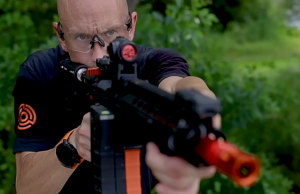

Summary: Choosing between Byrna and Umarex pepper launchers isn’t just about price—it’s about understanding what you actually need for self-defense. This comprehensive review breaks down the critical differences in stopping power, build quality, manufacturing origin, and real-world performance between these two popular non-lethal options. Whether you’re a first-time buyer or upgrading your carry setup, you’ll discover which launcher truly delivers on protection versus which one is better suited for training. We’ve tested both, analyzed user experiences, and cut through the marketing to give you the straight facts you need to make an informed purchase.
| Feature | Byrna (SD/LE Models) | Umarex (HDP 50/T4E Series) |
|---|---|---|
| PRIMARY PURPOSE | ||
| Main Use | Self-Defense Purpose-built for protection | Training & Sport Shooting Some defensive capability |
| STOPPING POWER | ||
| Kinetic Energy | ~15 Joules (LE model) High defensive impact | ~5-8 Joules Lower defensive impact |
| Projectile Size | .68 Caliber Larger impact area | .43 or .50 Caliber Smaller projectiles |
| Ammunition Types | Pepper, Tear Gas, Kinetic Multiple options | Pepper powder, Marking Limited options |
| Effective Range | Up to 60 feet Better standoff distance | 30-40 feet Shorter effective range |
| BUILD QUALITY & CONSTRUCTION | ||
| Manufacturing | Made in USA Fort Wayne, Indiana | Made in Asia German-designed |
| Build Quality | Premium Reinforced polymers, metal components | Good to Very Good Varies by model/price |
| Frame Construction | Heavy-duty defensive grade Impact/weather resistant | Standard to good Training-grade durability |
| Trigger Mechanism | Refined, consistent pull Defensive-focused | Functional, realistic feel Training-focused |
| PRICING & VALUE | ||
| Entry Price | $400-500 (SD model) Higher investment | $100-250 Budget-friendly entry |
| Premium Models | $600-700 (LE/Bundles) Maximum defensive power | $250-300 Premium training tools |
| Value Proposition | Best for serious defense Higher cost justified | Best for training/budget Excellent entry value |
| CAPACITY & OPERATION | ||
| Magazine Capacity | 5-8 rounds Compact mags | 5-12 rounds Varies by model |
| Reload Speed | ~3 seconds Drop-free magazines | ~3-4 seconds Model dependent |
| Power Source | 12g CO2 cartridges 20-30 shots per cartridge | 12g CO2 cartridges 20-30 shots per cartridge |
| Cold Weather Performance | Better More consistent in cold | Good Some velocity loss |
| ACCURACY & HANDLING | ||
| Accuracy (30 feet) | Very Good Center mass reliable | Excellent More precise sights |
| Realistic Feel | Good defensive feel Purpose-built ergonomics | Excellent Mimics real firearms closely |
| Sights | Basic functional sights Quick acquisition | Better sight systems Multiple options |
| Weight | Moderate Balanced for carry | Light to Moderate Model dependent |
| LEGAL & CARRY CONSIDERATIONS | ||
| Federal Classification | Non-firearm No background check needed | Non-firearm No background check needed |
| Appearance | Distinctive design Less firearm confusion | Very realistic Can draw attention |
| State/Local Laws | Legal in all 50 states* *Check local restrictions | Legal in most areas* *Check local restrictions |
| Concealed Carry | Holster options available Easier to carry discreetly | Holster options available Size varies by model |
| MAINTENANCE & SUPPORT | ||
| Parts Availability | Excellent US-based quick shipping | Good International supply chain |
| Maintenance Level | Low Periodic cleaning/o-rings | Low to Moderate Model dependent |
| Warranty/Support | Strong US support Responsive customer service | Good support Through distributors |
| BEST FOR | ||
| Primary Self-Defense | ✓✓✓ Excellent | ✓ Adequate |
| Training/Practice | ✓✓ Good | ✓✓✓ Excellent |
| Budget Buyers | ✗ Premium priced | ✓✓✓ Best Value |
| Maximum Stopping Power | ✓✓✓ Highest Available | ✓ Moderate |
| Restricted States/Cities | ✓✓✓ Best Alternative | ✓✓ Good Alternative |
Quick Verdict
✓ Choose Byrna If You:
- Need serious self-defense stopping power
- Want USA-made quality and support
- Can invest $400-700 for premium protection
- Live in a restricted firearm area
- Prioritize defensive capability over cost
✓ Choose Umarex If You:
- Want realistic firearm training tools
- Need budget-friendly entry ($100-250)
- Focus on practice and skill development
- Want multiple firing modes and features
- Prefer traditional pistol feel and handling
Bottom Line: Byrna dominates for actual self-defense with superior power and US manufacturing, while Umarex delivers excellent training value at a fraction of the cost. Your choice depends on whether you’re investing in protection or practice.
What Makes Byrna and Umarex Pepper Launchers Different?
 |  |
The fundamental difference between Byrna and Umarex comes down to purpose. Byrna builds dedicated self-defense launchers designed specifically for protection situations. These aren’t toys or training tools; they’re engineered to stop threats. The Byrna SD and LE models fire .68 caliber projectiles with genuine stopping power, combining kinetic impact with chemical deterrents like pepper or tear gas payloads.
Umarex takes a different approach entirely. Their pepper launcher lineup, including models like the HDP 50 and T4E series, originated from training and sport shooting platforms. These CO2-powered guns excel at realistic handling and target practice. The Umarex Glock 17 replica, for example, mimics the weight and feel of an actual firearm, making it valuable for training drills. However, this focus on realism means compromises in defensive effectiveness.
Manufacturing location matters more than you might think. Byrna proudly manufactures its launchers in Fort Wayne, Indiana. This US-based production ensures quality control and supports American workers. Umarex, conversely, is a German company (UMAREX GmbH & Co. KG) with manufacturing spread across Asia. While their build quality remains solid for the price point, the supply chain and quality oversight differ significantly from Byrna’s domestic operation.
Byrna Launcher Review: Built for Real Self-Defense
The Byrna SD represents the company’s mainstream self-defense option. Right out of the box, you notice the solid construction. The polymer frame feels substantial without excessive weight, and the ergonomics support quick deployment. This isn’t a weapon you’ll fumble with under stress. The launcher mechanism operates on compressed CO2, delivering consistent velocity across multiple shots without complex setup or maintenance.
Byrna’s LE model steps up the power significantly, delivering approximately 15 Joules of kinetic energy. That’s enough force to cause pain compliance at distance while the chemical payload does its work. The effective range extends to 60 feet, giving you standoff distance from a potential threat. This matters tremendously in self-defense scenarios where closing distance increases danger.

Loading the Byrna takes seconds once you’ve practiced. The magazine system holds five rounds, and you can carry spare mags for quick reloads. The firing mechanism includes a proper safety that prevents accidental discharge, yet disengages smoothly when needed. Users report the trigger pull feels crisp and predictable—critical for accuracy when adrenaline is pumping.
Chemical rounds make Byrna unique among pepper launchers. Beyond standard pepper balls, you can load tear gas projectiles or solid kinetic rounds depending on your needs. This versatility lets you match ammunition to the situation. The pepper payload disperses on impact, creating a cloud that affects vision and breathing. It’s a genuine defensive tool, not just a deterrent.
How Does Umarex Stack Up for Personal Protection?
Umarex pepper launchers serve their intended purpose well—but that purpose isn’t necessarily self-defense. The HDP 50 fires .50 caliber powder balls using CO2 propulsion. These projectiles carry pepper or marking powder, and the compact pistol format makes it easy to carry. The realistic feel helps if you’re training for actual firearm proficiency, as the weight distribution and trigger mechanics approximate real guns.
The T4E Walther PPQ represents Umarex’s attempt at a defensive pepper launcher. It chambers .43 caliber rounds and operates with familiar pistol controls. Shooters transitioning from firearms appreciate the muscle memory compatibility. However, the stopping power simply doesn’t compare to Byrna’s offerings. The kinetic energy delivered by these smaller projectiles lacks the impact needed to reliably stop a determined threat.

Build quality on Umarex models varies by price point. Entry-level options around $100-150 use mostly polymer construction that feels lighter and sometimes cheaper than Byrna’s frames. Mid-range Umarex models improve significantly, incorporating metal components and better fit-and-finish. Still, none match the purpose-built solidity of a Byrna LE. The difference becomes obvious when handling both side-by-side.
Where Umarex excels is training value. If you want to practice pistol fundamentals without firearms costs and regulations, these launchers deliver. The CO2 system provides realistic recoil impulse. Magazine changes mirror actual firearm manipulations. You can set up backyard ranges without worrying about noise complaints. For this specific use case, Umarex offers excellent value—just don’t confuse training tools with defensive weapons.
What Makes Byrna and Umarex Pepper Launchers Different?
| |
Let’s address the critical question directly: will these pepper launchers stop an attacker? The answer depends entirely on which model you’re discussing and what you mean by “stop.” A Byrna LE firing kinetic rounds combined with chemical payload can absolutely deter and incapacitate most threats at defensive distances. The pain from impact, coupled with the immediate effects of pepper or tear gas, creates multiple layers of deterrence.
Real-world video evidence shows Byrna launchers causing immediate reactions when they connect with targets. The .68 caliber projectiles deliver significant kinetic shock—enough to break focus and cause pain compliance. When those rounds burst and release chemical agents, the target faces burning eyes, difficulty breathing, and disorientation. This combination genuinely disrupts an attack, buying you time to escape or call for help.
Umarex launchers face a more challenging situation regarding defensive stopping power. The smaller caliber projectiles (.43 or .50 depending on model) simply carry less kinetic energy. While they’ll definitely get someone’s attention and the pepper powder can be effective, you’re relying primarily on the chemical agent rather than the kinetic impact. Against a motivated or drug-impaired attacker, this might not provide adequate protection.
Comparing either option to lethal firearms reveals an important limitation. Neither Byrna nor Umarex approaches the reliable stopping power of even small-caliber handguns. These are deterrent tools, not fight-stoppers in the same category as firearms. They occupy the non-lethal space for people who can’t or won’t carry firearms but need something beyond pepper spray. Understanding this limitation is crucial for realistic self-defense planning.
What’s the Real Cost Difference Between Byrna and Umarex?
| |
Price creates the most obvious separation between these brands. A Byrna SD typically runs $400-500, with the Byrna SD Launcher Ultimate Bundle pushing toward $600-700 when you include extra magazines, holsters, and ammunition variety packs. The LE model commands even higher prices due to its increased power. This represents a significant investment for a non-lethal defensive option.
Umarex pepper launchers start much lower, with basic models around $100-150. Even premium Umarex options like the HDP 50 rarely exceed $250-300. If pure upfront cost is your primary concern, Umarex wins decisively. You can get into a Umarex system for less than half what a comparable Byrna costs. This makes Umarex accessible to more buyers on limited budgets.
However, the price comparison gets more complex when you factor in ammunition and accessories. Both systems use proprietary projectiles that cost roughly similar amounts per round. Quality holsters, spare magazines, and maintenance items add up regardless of which brand you choose. The initial purchase price difference narrows somewhat when you build out a complete carry system.
Value becomes the more important question than raw price. What are you actually getting for your money? With Byrna, you’re paying for US manufacturing, higher build quality, greater defensive capability, and a product engineered specifically for protection. Umarex offers solid construction and excellent training utility at a lower entry point, but you’re not getting the same defensive performance. The “better value” depends entirely on your specific needs and intended use.
Which Pepper Launcher Offers Better Build Quality and Reliability?
| |
Build quality separates professional tools from budget options in any category. Byrna launchers feel like serious defensive tools the moment you pick them up. The frame construction uses reinforced polymers that resist impacts and weather exposure. Metal components appear in critical stress points. The overall fit-and-finish approaches what you’d expect from mid-tier firearms rather than toys or sporting equipment.
Trigger mechanisms on Byrna models demonstrate thoughtful engineering. The pull weight stays consistent, the break point is clean, and reset is positive. These characteristics matter tremendously for accurate shooting under stress. The safety selector engages firmly with tactile feedback, preventing accidental activation while remaining easy to manipulate when needed. Small details like these reveal the defensive focus behind Byrna’s design philosophy.
Umarex quality varies considerably across their product line. Budget models feel noticeably cheaper, with looser tolerances and more plastic components. The trigger mechanisms work but lack the refinement found in Byrna or actual firearms. Mid-range and premium Umarex offerings improve substantially, using better materials and tighter manufacturing tolerances. The HDP 50, for instance, demonstrates surprisingly solid construction for its price point.
Reliability testing shows both brands perform adequately under normal conditions. Byrna launchers generally prove more resistant to malfunctions and function across wider temperature ranges. Their CO2 system maintains more consistent velocity shot-to-shot. Umarex models occasionally experience feeding issues or velocity variations, particularly in cold weather. For a defensive tool you’re trusting your safety to, Byrna’s reliability edge becomes significant. For range toys and training tools, Umarex’s occasional quirks matter less.
How Do Magazine Capacity and Reload Speed Compare?
| |
Byrna launchers typically hold five to eight rounds depending on the specific model and magazine. The Byrna SD uses a five-round magazine that drops free when the mag release is pressed. Reloading takes roughly three seconds with practice—comparable to a pistol magazine change. The compact magazine design means you can easily carry two or three spare mags without adding much bulk to your setup.
Umarex capacity varies by model but generally ranges from five to twelve rounds. The larger magazines provide more shots before reloading, which sounds advantageous. However, the larger mags also add weight and bulk to what’s supposed to be a compact carry gun. The HDP 50 uses a seven-round magazine that functions smoothly, while some T4E models incorporate extended magazines that border on cumbersome for concealed carry.
Magazine reliability proves critical for defensive tools. Byrna magazines use robust spring mechanisms that maintain tension over thousands of load cycles. Feed lips are reinforced to prevent deformation. Users report minimal magazine-related malfunctions even after extensive use. The magazines cost more as replacement parts, but their durability justifies the investment.
Umarex magazines show more variability in quality. Premium model magazines work reliably, but budget line magazines occasionally develop feeding issues after moderate use. The plastic feed lips on some models can deform if the magazine is dropped or subjected to impact. For defensive applications, this represents a potential point of failure you should consider. Training applications tolerate occasional magazine issues better than life-or-death situations.
What About Accuracy and Effective Range?
| |
Byrna launchers claim effective defensive range out to 60 feet, and real-world testing confirms you can score solid hits at that distance with practice. The .68 caliber projectiles are inherently less accurate than bullets, but the larger payload makes precise accuracy less critical. A pepper ball that bursts within a few feet of the target still deploys its chemical cloud effectively.
At typical defensive distances of 10-30 feet, Byrna launchers demonstrate very acceptable accuracy. You can reliably hit center mass on a human-sized target. The sights work well enough for quick acquisition, though they’re basic compared to modern pistol sights. Wind affects the lightweight projectiles more than firearms, so outdoor accuracy decreases in breezy conditions. Indoor defensive scenarios eliminate this variable.
Umarex launchers generally shoot a bit more accurately due to their firearms-like barrel and sight systems. The smaller, denser projectiles maintain trajectory better at distance. However, this accuracy advantage matters most for target shooting and training rather than defensive use. The reduced kinetic energy at longer ranges means you’re primarily relying on chemical payload, which doesn’t require pinpoint accuracy to be effective.
Practical defensive range for both systems realistically stays under 30-40 feet. Beyond that distance, projectile energy drops significantly, accuracy decreases, and you introduce liability questions about shooting at distant threats. Most self-defense encounters occur at much closer ranges anyway. Both Byrna and Umarex perform adequately within realistic defensive distances, with Byrna’s higher power providing more margin for error.
Are There Legal Considerations Between Byrna and Umarex?
| |
Legal status varies significantly by jurisdiction for both brands. Neither counts as a firearm under federal law, which means you can purchase them without background checks or waiting periods in most states. However, some municipalities regulate pepper launchers similarly to firearms, requiring permits or restricting carry. Always check local laws before purchasing or carrying either option.
Byrna actively markets its launchers as legal alternatives to firearms in restrictive states. The company maintains information about state-by-state legality on its website. Generally, Byrna launchers are legal in all 50 states, though some cities impose additional restrictions. The non-lethal classification helps in jurisdictions where firearm ownership is heavily restricted or where certain individuals are prohibited from owning guns.
Umarex pepper launchers face similar legal treatment, though the company’s focus on training and sport shooting sometimes creates confusion. Some Umarex models look extremely realistic, which can trigger issues under laws regulating replica firearms. Carrying a realistic-looking Umarex gun in public might draw law enforcement attention even where it’s technically legal. Byrna’s more distinctive appearance helps avoid these misunderstandings.
Self-defense use introduces additional legal considerations regardless of which launcher you choose. Most jurisdictions allow non-lethal force in self-defense situations where lethal force would also be justified. However, local laws vary on what constitutes appropriate force and when you can deploy chemical agents. Using a pepper launcher against someone could potentially result in assault charges if the situation doesn’t clearly justify self-defense. Consult with local legal experts to understand your area’s specific requirements.
Maintenance Requirements and Long-Term Ownership Costs
| |
CO2 systems require different maintenance than firearms, but both Byrna and Umarex remain relatively low-maintenance compared to actual guns. The primary maintenance task involves cleaning the barrel and action periodically to remove residue from ruptured pepper balls. Byrna recommends basic cleaning after every few hundred rounds, which takes about 15 minutes with included tools.
CO2 cartridge replacement represents the main ongoing cost. Both systems use standard 12-gram CO2 cartridges that cost roughly $0.50-1.00 each depending on where you buy in bulk. Each cartridge typically provides 20-30 shots, so your shooting costs include both ammunition and CO2. This makes practice shooting more expensive than .22 LR firearms but cheaper than centerfire pistols.
Byrna launchers include rubber o-rings and seals that require occasional replacement to maintain proper CO2 seal and velocity. Byrna sells maintenance kits with replacement o-rings and lubricant. These kits run $20-30 and should last through thousands of rounds with proper care. The US-based manufacturing means replacement parts remain readily available with quick shipping.
Umarex parts availability depends on the specific model. Popular models have good parts support through Umarex’s distribution network. Niche or discontinued models might face parts scarcity. The international supply chain can mean longer waits for replacement components. Maintenance requirements are similar to Byrna—periodic cleaning and o-ring replacement. Budget Umarex models may need more frequent part replacement due to less durable construction.
Making Your Decision: Byrna or Umarex for Your Needs?
| |
Choose Byrna if self-defense is your primary concern and budget allows. The higher stopping power, US manufacturing, and purpose-built defensive design justify the premium price for people serious about non-lethal protection. The Byrna SD serves most users well, while the LE model provides maximum power for those wanting the strongest non-lethal option available. Factor in the peace of mind from carrying a tool actually designed for defense rather than adapted from training equipment.
Umarex makes more sense for budget-conscious buyers or those primarily interested in training and sport shooting. The realistic handling and lower cost provide excellent value for practice and familiarization. If you live somewhere with restrictive firearm laws but want to maintain shooting skills, Umarex offers an accessible solution. The defensive capability exists but shouldn’t be your primary reason for choosing Umarex over Byrna.
Consider your carry situation carefully. Byrna’s distinctive appearance reduces confusion with actual firearms, while some Umarex models might create problems if spotted by others. Think about where you’ll carry the launcher and how you’ll carry it. Both companies offer holster options, but Byrna’s defensive focus means more purpose-designed concealment solutions.
Training commitment matters regardless of which brand you choose. Neither launcher works effectively without practice. You need to understand your specific model’s operation, practice drawing and firing, and learn to judge distances and situations. Ammunition costs for practice add up with either system, though Umarex’s lower entry price might leave more budget for training rounds. The best defensive tool is one you’ve practiced with extensively and will actually carry consistently.
Final Thoughts: The Right Tool for Your Protection
| |
The Byrna vs Umarex decision ultimately comes down to matching the tool to your specific needs. Byrna excels in dedicated self-defense applications, offering genuine stopping power in a purpose-built package manufactured in the USA. The higher price reflects better defensive capability and more robust construction. For people serious about non-lethal protection and willing to invest appropriately, Byrna delivers superior performance where it matters most.
Umarex provides solid value for training-focused users and budget-conscious buyers. The realistic handling helps maintain firearms skills, and the lower cost makes entry easier. While the defensive capability exists, it doesn’t match Byrna’s specifically designed tools. Understanding this distinction prevents disappointment and ensures you get what you actually need.
Neither option replaces a firearm for those legally able to carry guns. They occupy the non-lethal defensive space, offering options between pepper spray and lethal force. Both are significantly more effective than traditional pepper spray alone, providing standoff distance and physical impact alongside chemical effects. Your legal situation, physical abilities, and comfort level with different defensive tools should guide your choice.
Before making your final purchase, handle both options if possible. Many sporting goods stores stock at least some models from each brand. The feel, weight, and controls might immediately favor one option over the other for your hands and preferences. Read recent reviews on YouTube and other video platforms to see both launchers in action. Watch for independent reviews rather than company promotional videos to get unbiased performance assessments.
Remember that any defensive tool requires commitment to training and legal understanding. Buying a pepper launcher doesn’t automatically make you safer—only proper training, practice, and appropriate carry decisions do that. Whichever brand you choose, invest time in becoming proficient with your specific model. Your defensive preparation should include understanding local laws, developing situational awareness, and knowing when deployment is legally and tactically appropriate.
Key Takeaways for Pepper Launcher Buyers
- Purpose drives choice: Byrna focuses exclusively on self-defense with higher power and US manufacturing, while Umarex excels at training and sport shooting at lower prices
- Stopping power differences: Byrna LE delivers approximately 15 Joules of kinetic energy with .68 caliber projectiles; Umarex uses smaller calibers with less defensive impact
- Price reflects specialization: Byrna costs $400-700 for purpose-built defense; Umarex runs $100-300 for training-oriented platforms
- Manufacturing matters: Byrna manufactures in Fort Wayne, Indiana; Umarex is a German company with Asian production
- Build quality gap: Byrna offers more robust construction specifically for defensive use; Umarex quality varies by price tier but optimizes for realistic handling
- Effective range reality: Both work best under 40 feet for defensive scenarios; Byrna maintains better energy at distance
- Legal status similarities: Neither is a firearm federally, but local laws vary; Byrna’s distinctive appearance reduces confusion with actual guns
- Ammunition versatility: Byrna offers pepper, tear gas, and kinetic rounds in .68 caliber; Umarex uses various calibers depending on model
- Training investment required: Neither works without practice; budget for ammunition and CO2 for regular training sessions
- Realistic expectations essential: Both are non-lethal deterrent tools, not fight-stoppers equivalent to firearms; understand their limitations in defensive planning
| |