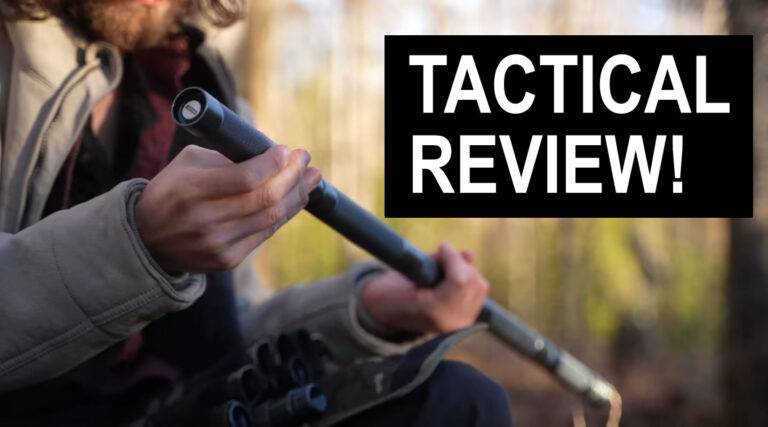






If you’ve spent any time researching tactical hiking sticks, you’ve probably seen the Trek Staff and Tactistaff sitting side by side in search results. They look similar. They share the same base material. Both promise 15+ integrated tools.
And that’s exactly where the confusion starts.
I own both. I’ve carried both on trails and put both through the kind of field handling that goes beyond unboxing videos. The short version: these are genuinely different products built for different types of hikers, and the 2-pound weight gap between them tells you almost everything you need to know about which one belongs in your pack.
Why These Two Get Confused
Both the Trek Staff and Tactistaff use 6061-T6 aluminum alloy. Both break down into modular tube sections. Both come with a canvas carry bag. Both include a magnetic compass, fire starter, and a similar spread of integrated survival tools.
On a spec sheet, they could be twins.
But pick them up and the illusion breaks. The Tactistaff is a staff. The Trek Staff is a pole. That distinction matters more than any feature list.
The Weight Gap Changes Everything
| Spec | Trek Staff | Tactistaff |
|---|---|---|
| Weight (full config) | ~2 lbs | ~3.74 lbs |
| Max Length | ~54″ | 54.7″ |
| Tube Sections | Modular screw-together | 4-8 modular tubes |
| Material | 6061-T6 Aluminum | 6061-T6 Aluminum |
| Tools Included | 15+ | 15+ |
| Carry System | Tactical canvas waist bag | Tactical canvas waist bag |
| Manufacturer | Trek Staff (separate brand) | Prime Adventure |
At roughly 2 pounds, the Trek Staff behaves like a trekking pole with teeth. You can carry it for 8 miles without your arms filing a complaint. It’s light enough to use with a natural stride, and the aluminum construction still gives it enough backbone to handle impacts that would snap a carbon fiber pole in half.
The Tactistaff at nearly 4 pounds is a different animal entirely. You feel it in your grip. You feel it when you plant it. That mass is a liability over distance but a serious asset in scenarios where you need a staff that can take punishment or deliver it.
Who Should Carry the Trek Staff
The Trek Staff fits hikers who cover ground. If you’re logging serious mileage on backcountry trails and want something with genuine self-defense capability that won’t slow you down, this is the lighter option. It fills a gap I noticed years ago during cross-country hiking: standard trekking poles are ergonomic and light, but they’re built for balance, not impact. If something goes sideways on trail, a carbon fiber pole is basically a pool noodle.
The Trek Staff fixes that problem without turning your hiking setup into a strength workout.
It’s also the better pick for everyday carry situations. At 2 pounds broken down into a waist bag, it doesn’t draw attention and doesn’t feel like a burden. Keep one in your vehicle. Toss it in a daypack. It fits into the rhythm of regular outdoor activity without demanding a commitment.
Who Should Carry the Tactistaff
The Tactistaff earns its weight on shorter treks, car camping setups, and terrain where you expect to plant the staff and lean on it. That extra mass translates directly into stability. When you drive it into soft ground or wedge it between rocks, you feel the difference. It doesn’t flex. It doesn’t shimmy.
If your primary concern is self-defense capability and you’re not worried about carrying it for hours, the Tactistaff has the edge. Nearly 4 pounds of machined aluminum swung with intent is a serious deterrent against wildlife or anything else that gets too close on trail.
The Tactistaff also has a deeper accessory ecosystem through Prime Adventure. You can add a T-handle grip, shovel head attachment, paracord handle wrap, and even a collapsible fishing rod. That modularity makes it function less like a hiking stick and more like a platform you build around.
The Tool Overlap (and Where They Differ)
Both sticks share the core survival tool spread:
- Magnetic compass
- Fire starter
- Bottle opener
- Screwdriver
- Knife/blade tool
- Whistle
The Trek Staff adds a glass breaker and emergency rope to its standard kit. The Tactistaff includes a harpoon head, ice cone, scale remover, and disgorger, which tilts the tool set toward fishing and cold-weather utility.
A Quick Note on the Compass
Both include a magnetic compass integrated into the tube assembly. I’ll be direct: neither compass replaces a proper baseplate compass or lensatic for serious land navigation. They’re not precision instruments.
But having directional orientation literally in your grip while you trek has real value. If you’re on a marked trail and just need to confirm you haven’t drifted off bearing, a quick glance at the compass on your staff saves you from stopping, dropping your pack, and digging through a pouch. It’s a convenience feature that punches above its weight class.
Build Quality: Side by Side
Both staffs use the same 6061-T6 aluminum alloy, and both can support a person’s body weight when planted. I’ve leaned hard on both without any flex, creak, or concern.
The modular screw-together joints are where differences show up. The Tactistaff tubes thread together with a reassuring tightness that holds up across repeated assembly cycles. The Trek Staff assembles similarly but with slightly less mass at each joint, which is the tradeoff you accept for the lighter carry weight.
Neither staff will rattle loose during normal use. Both require a periodic check-and-tighten during extended hikes, which is standard for any modular tube design. If you’ve used a collapsible tent pole system, you already know the drill.
Portability and Packability
Broken down, both fit into their respective canvas waist bags and ride on your belt without getting in the way. The Trek Staff’s lighter weight gives it a slight edge here simply because you forget it’s there faster.
The Tactistaff broken down is chunkier due to the thicker tube walls. It still packs fine, but you’ll notice the extra mass sitting on your hip. On a long approach hike before you actually deploy the staff, that difference adds up.
Both bags are functional but basic. Canvas construction, simple closure. They do the job. Don’t expect MOLLE integration or any tactical attachment system beyond a belt loop.
Price and Availability
The Tactistaff is available directly through Prime Adventure and typically runs around $98.
The Trek Staff has had some availability fluctuations. The original brand site has experienced downtime, though the product remains available through various retailers. If you’re considering the Trek Staff, verify the seller’s reputation before purchasing.
For a deeper breakdown of each individual product, check out our standalone reviews:
- Tactistaff Review: Your Ultimate Adventure Companion
- Trek Staff Review: Why This Hiking Stick Changed My Backcountry Game
- Best Self-Defense Trekking Pole and Hiking Staff
The Quick Decision Matrix
| Your Situation | Go With |
|---|---|
| Long-distance backcountry hiking | Trek Staff |
| Car camping or short day hikes | Tactistaff |
| Everyday vehicle carry | Trek Staff |
| Maximum self-defense capability | Tactistaff |
| Fishing and cold-weather utility | Tactistaff |
| Weight-conscious packing | Trek Staff |
| Accessory expansion (shovel, T-handle, rod) | Tactistaff |
| Urban/travel carry | Trek Staff |
Gear Call: One Staff, Two Missions
These aren’t the same product with different labels. The 2-pound weight gap is the dividing line, and it splits cleanly down use case.
The Trek Staff is the distance tool. Light enough to carry all day, strong enough to trust when it matters. It’s built for hikers who want self-defense capability without sacrificing the mobility that got them into the backcountry in the first place.
The Tactistaff is the planted tool. Heavy enough to command ground, modular enough to build into a multi-role platform. It’s built for people who stay closer to base, move deliberately, and want a staff they can lean on in every sense of the word.
If you only carry one, pick the one that matches how you actually move through terrain. Not how you wish you moved. Not what looks better on a gear list. How you actually hike.
That honest assessment will serve you better than any spec comparison.