






When planning your meals for a camping trip, it’s vital to contemplate factors like trip duration, number of people, and dietary needs. You want foods that are easy to pack and prepare, ensuring everyone stays energized and satisfied. From quick breakfasts to hearty dinners, there are plenty of options out there. Let’s explore some essential food groups and meal ideas that can elevate your outdoor experience.
Assessing Your Camping Needs and Preferences
When planning meals for your camping trip, how do you determine what you’ll need? Start by considering the duration of your trip and the number of people joining you.
Make a list of meals you’d like to prepare, keeping in mind individual dietary preferences and restrictions. Think about the cooking equipment you’ll have available—will you be grilling, cooking over a campfire, or using a portable stove? This will affect your ingredient choices.
It’s also smart to factor in the climate; if it’s hot, you might want lighter, invigorating meals. Additionally, don’t forget to consider portable alarms to enhance your safety while camping, especially in isolated areas.
Finally, jot down your grocery list, including snacks and beverages, ensuring you have enough for everyone without overpacking. Planning thoughtfully will make your camping experience enjoyable and hassle-free!
Essential Camping Food Groups
To guarantee you have a well-rounded and satisfying diet while camping, it’s essential to include a variety of important food groups.
Start with proteins like canned beans, jerky, or chicken; these will keep you fueled for outdoor activities. Next, pack whole grains such as oats or quinoa for energy and fiber.
Fresh fruits and vegetables are significant, too—think apples, carrots, or bell peppers that can withstand a bit of travel. Don’t forget healthy fats like nuts or nut butter for added energy and satiety.
Finally, include dairy or dairy alternatives for calcium. By covering these food groups, you’re setting yourself up for a nutritious and enjoyable camping experience.
Easy-to-Pack Snacks for the Trail
Snacks that are easy to pack can make all the difference on the trail, keeping your energy levels up and your spirits high. For quick boosts, consider trail mix with nuts, seeds, and dried fruit—it’s lightweight and packed with nutrients.
Granola bars or protein bars are also great options; they’re easy to carry and provide lasting energy. Don’t forget fresh fruit like apples or bananas, which can be invigorating on a hot day.
Jerky offers a savory protein kick, while nut butter packets are versatile and filling. Finally, keep some dark chocolate on hand for a sweet treat; it lifts your mood after a long hike.
With these snacks, you’ll stay energized and ready for your next adventure!
Meal Ideas for Breakfast
Starting your day with a satisfying breakfast can set the tone for a successful camping trip. Consider whipping up some hearty oatmeal, which you can customize with nuts, dried fruit, or honey.
If you prefer something savory, scrambled eggs with veggies and cheese can be cooked over the campfire for a warm, filling option.
Pancakes are always a hit, and you can prepare the dry mix at home; just add water and cook them on a skillet.
For a quick fix, grab a granola bar or yogurt with fruit.
Don’t forget to hydrate—coffee or herbal tea can provide a warm start.
With these breakfast ideas, you’ll fuel up and be ready for a day of adventure in the great outdoors!
Quick and Simple Lunch Options
When you’re out in the wild, finding quick and simple lunch options can make all the difference in keeping your energy up for afternoon adventures.
Consider packing sandwiches with your favorite deli meats, cheeses, and veggies—just layer them between whole grain bread for a nutritious boost. Wraps are another great option; use tortillas filled with hummus, spinach, and sliced turkey for a tasty twist.
Don’t forget snacks like trail mix or granola bars to munch on while you hike! If you want something warm, instant soups or pre-made pasta salads can be a quick fix. Just add hot water or enjoy cold.
These easy meals let you refuel without spending too much time away from the great outdoors.
Hearty Dinner Recipes for the Campfire
As the sun sets and the campfire crackles to life, nothing beats a hearty dinner to satisfy your hunger after a day of outdoor fun.
One simple option is foil packet meals. Just toss diced chicken, veggies, and your favorite seasonings into a piece of aluminum foil, seal it up, and cook over the fire for about 20 minutes.
Another crowd-pleaser is campfire chili. Pre-make a robust chili at home, store it in a sealed container, and heat it up in a pot over the flames.
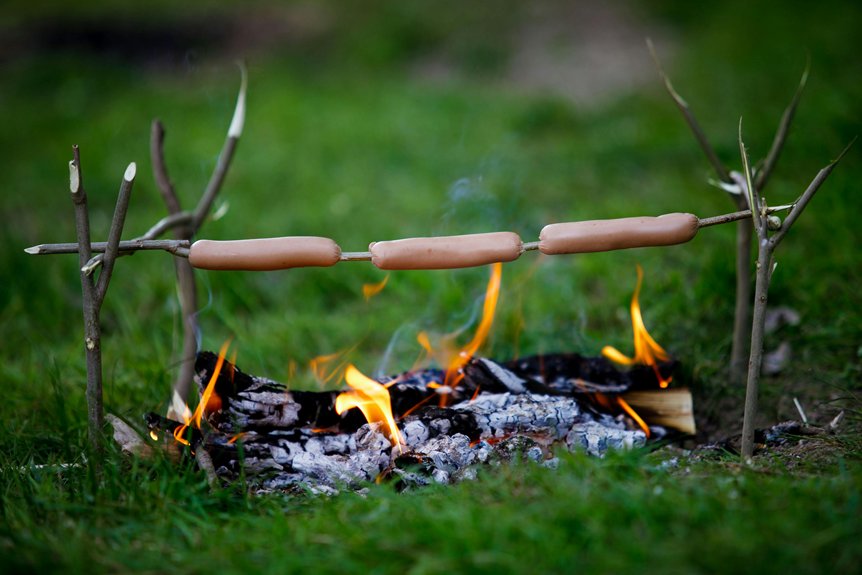
If you’re craving something classic, skewer some marinated steak or veggies and grill them directly over the fire.
Whichever dish you choose, these hearty meals will warm you up and keep you fueled for more adventures!
Delicious Desserts to Satisfy Your Sweet Tooth
Camping isn’t just about savory dinners—it’s also the perfect opportunity to indulge your sweet tooth with some easy-to-make desserts.
Consider packing s’mores ingredients: graham crackers, marshmallows, and chocolate bars. Just toast those marshmallows over the fire, and you’ve got a classic treat!
If you want something fruity, try foil packet desserts. Simply toss sliced apples or berries with a sprinkle of cinnamon and sugar, wrap them in foil, and heat them over the fire.
For a quick and satisfying option, bring along cookie dough—just scoop and bake on a hot stone or skillet.
Finally, don’t forget about trail mix with chocolate bits; it’s a sweet snack that’s easy to take along.
Enjoy your camping adventure with these delightful treats!
Tips for Storing and Preserving Food
To guarantee your camping meals stay fresh and safe to eat, it’s essential to pay attention to proper food storage and preservation techniques.
Start by packing perishables in a cooler with plenty of ice packs, ensuring the temperature stays below 40°F. Use airtight containers to prevent moisture and pests from ruining your food. Pre-portion snacks and meals to minimize the number of times you open the cooler, keeping it colder for longer.
For dry goods, use resealable bags or containers to maintain freshness. If you’re bringing canned or jarred foods, store them in a shady spot to avoid overheating.
Finally, always check expiration dates before packing and consume items in the order they were packed to reduce waste.
Cooking Gear and Utensils You’ll Need
When heading out for a trip in the great outdoors, having the right cooking gear and utensils can make all the difference in your meal preparation.
Start with a portable stove or a campfire grate for cooking. Don’t forget a set of pots and pans that are lightweight and easy to clean. A sturdy spatula, tongs, and a sharp knife are essential for food prep.
Pack a cutting board and a set of durable plates and utensils for serving. A cooler is crucial for keeping perishables fresh, while a multi-tool can handle various tasks.
Finally, bring a can opener and a firestarter for convenience. With these items, you’ll be ready to whip up delicious meals under the stars!
Preparing and Prepping Meals Ahead of Time
Having the right cooking gear sets the stage for a successful camping experience, but the real magic happens when you prepare and prep your meals ahead of time.
Start by choosing simple, versatile recipes that require minimal ingredients. Chop veggies, marinate proteins, and pre-cook grains at home. Store everything in labeled containers for easy access.
Consider assembling meal kits for breakfast, lunch, and dinner to streamline the process. Don’t forget to pack snacks, like trail mix or energy bars, to keep your energy up on hikes.
Freeze meals if you can; they’ll stay fresh longer and help keep your cooler cold. With a bit of planning, you’ll enjoy delicious, hassle-free meals in the great outdoors, leaving more time for fun!


Christopher Joseph

Christopher Joseph writes for USA Self Defense Centers, covering personal safety, martial arts, tactical preparedness, and self-defense products. His background includes training in Brazilian Jiu-Jitsu, Muay Thai, Krav Maga, Escrima, and tactical defense, along with an education in criminal justice as well as communications. He combines this practical and academic experience to provide clear, lawful guidance that helps readers make informed decisions about protecting themselves and their families.