When you think about camping, safety should be at the forefront of your mind. It’s important to understand the potential outdoor hazards and how to mitigate them. Choosing the right campsite, packing the necessary gear, and being aware of wildlife are all essential steps. Plus, knowing how to handle fire safely can make a significant difference. But what about first aid and staying connected? Let’s explore these critical aspects further.
Understanding Outdoor Hazards
When you venture into the great outdoors, it’s vital to recognize the various hazards that can pose a threat to your safety. From unpredictable weather to wildlife encounters, being aware is important.
Sudden storms can roll in, so always check forecasts before heading out. And remember, wildlife isn’t just fascinating; it can be dangerous. Keep a safe distance from animals and avoid feeding them to prevent aggressive behavior.
Additionally, be cautious of natural terrain hazards like slippery rocks or steep slopes that can lead to falls.
Finally, stay alert for poisonous plants like poison ivy, which can ruin your trip. By understanding these outdoor hazards, you’ll be better prepared to enjoy your adventure while prioritizing your safety. Consider using a portable alarm like the HOZOL Trip Wire Alarm to enhance your awareness of surroundings while camping.
Choosing a Safe Campsite
Selecting a safe campsite is crucial for ensuring a pleasant outdoor experience, especially since your surroundings can impact your safety and comfort.
Look for a flat, dry area away from potential hazards like falling branches, unstable ground, or water sources that might flood. Make sure you’re at least 200 feet from lakes and streams to avoid contamination and pesky insects.
If you’re in bear country, choose a site away from food storage and cooking areas. Avoid camping in low spots where cold air settles or areas prone to wind.
Finally, check for nearby trails or roads to minimize disturbance but not so close that it compromises your privacy. A little attention to detail can make a big difference in your camping adventure.
Essential Gear for Safety
Packing the right gear can make all the difference in ensuring your safety while camping. Start with a first-aid kit stocked with essentials like band-aids, antiseptic wipes, and pain relievers.
A reliable flashlight or headlamp is vital for navigating after dark, while extra batteries keep you prepared. Don’t forget a multi-tool; it’s handy for various tasks.
A whistle can be a lifesaver in emergencies, helping you signal for help. Bring a firestarter to stay warm and cook food safely.
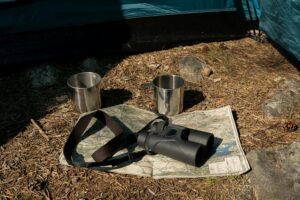
Finally, a quality map and compass or GPS device will keep you oriented in unfamiliar terrain. With this essential gear, you’ll enhance your safety and enjoy a worry-free camping experience.
Wildlife Awareness and Precautions
Understanding wildlife awareness and taking necessary precautions is essential for a safe camping experience.
Always store your food in bear-proof containers or hang it high in trees to avoid attracting unwanted visitors. Be mindful of your surroundings; look for animal tracks or droppings to gauge wildlife activity in the area.
Keep a safe distance from any animals you encounter, and never feed them; it can habituate them to humans. Practice noise discipline to avoid startling wildlife, and make certain to secure your campsite at night.
Educate yourself about the local fauna, especially any potentially dangerous species. Trust your instincts—if something feels off, it’s best to leave the area.
Staying vigilant and respectful of nature helps guarantee both your safety and that of the wildlife.
Fire Safety Guidelines
While enjoying the warmth of a campfire is a highlight of any camping trip, practicing fire safety is essential to prevent accidents and protect the natural environment.
Always set up your fire in a designated area, away from overhanging branches and flammable materials. Keep a bucket of water or sand nearby to extinguish the flames quickly.
When you build your fire, use only small, dry wood and never burn trash or plastic. Once you’re done, make sure to fully extinguish the fire by dousing it with water, stirring the ashes, and checking for any remaining embers.
Finally, never leave your fire unattended. By following these guidelines, you can enjoy your campfire safely and responsibly, ensuring a fun experience for everyone.
First Aid and Emergency Preparedness
Accidents can happen even in the most peaceful camping environments, making first aid and emergency preparedness essential for a safe trip.
Start by packing a well-stocked first aid kit, including band-aids, antiseptic wipes, pain relievers, and any personal medications. Familiarize yourself with basic first aid techniques, like treating cuts, sprains, and bites.
It’s also wise to have a plan for emergencies, such as knowing the location of the nearest hospital or emergency services. Share your itinerary with someone who’s not camping with you, so they know where to find you.
Finally, consider taking a first aid or CPR course to boost your confidence in handling emergencies. Being prepared can make all the difference when unexpected situations arise.
Staying Connected and Informed
Staying connected and informed during your camping trip is essential for both safety and enjoyment. Before you head out, check the coverage of your mobile phone. If you’re venturing into remote areas, consider bringing a satellite phone or a two-way radio for emergencies.
Download offline maps and weather apps to stay updated on changing conditions. Share your itinerary with someone you trust, so they know your plans. Keep a portable charger handy to guarantee your devices stay powered.
Additionally, familiarize yourself with local wildlife and potential hazards in the area. Staying aware of your surroundings and maintaining communication can help you navigate challenges and enhance your camping experience.