
When you’re out camping in colder weather, staying warm is essential for an enjoyable experience. You’ll want to evaluate several factors, from your sleeping bag to your clothing layers. Each choice plays a vital role in retaining heat and keeping the chill at bay. Ready to explore practical strategies that can make a significant difference? Let’s break down the essentials you need to know for a cozy camping trip.
Choosing the Right Sleeping Bag
When it comes to staying warm while camping, choosing the right sleeping bag is essential. First, consider the temperature rating; make certain it matches the conditions you’ll face. A sleeping bag rated for colder temperatures will keep you snug when the nights drop.
Next, think about insulation types—down is lightweight and compressible, while synthetic insulation performs better when wet.
Also, pay attention to the shape; mummy bags provide more warmth due to their snug fit, while rectangular bags offer more space but may lose heat.
Don’t forget about the size; guarantee it’s roomy enough for comfort but not too big to lose warmth.
Finally, look for features like draft collars and hoods to maximize your warmth throughout the night. Additionally, consider using a portable alarm system to enhance your safety and awareness while camping, especially in remote areas.
Layering Your Clothing Effectively
A good sleeping bag sets the foundation for a warm night, but your clothing choices are just as important for staying cozy during your camping trip.
Start with a moisture-wicking base layer to keep sweat away from your skin. Next, add an insulating layer, like fleece or down, to trap warmth. Finally, wear a waterproof and windproof outer layer to shield against the elements.
Don’t forget about accessories—wear a warm hat, gloves, and thick socks, as heat escapes easily from your extremities. It’s essential to avoid cotton, which retains moisture and can leave you cold.
Insulating Your Tent
Although you might think your tent offers sufficient protection from the cold, insulating it properly can make a significant difference in maintaining warmth during your camping trip.
Start by using a footprint or tarp under your tent to provide an extra layer of insulation from the cold ground. Inside, consider adding thermal blankets or sleeping pads to trap heat and create a barrier against drafts.
You can also hang reflective emergency blankets on the walls to bounce heat back into your space. Don’t forget to seal any gaps with weather stripping or tape to prevent chilly air from sneaking in.
Finally, adding rugs or carpet can make your tent cozier while enhancing insulation. These simple steps will help keep you warm and comfortable throughout your adventure.
Utilizing Heat Sources
To keep warm while camping, tapping into various heat sources can make a world of difference.
First, consider using a portable camp stove for cooking and heating water. Not only does it provide warmth, but the steam can also add moisture to the air inside your tent.
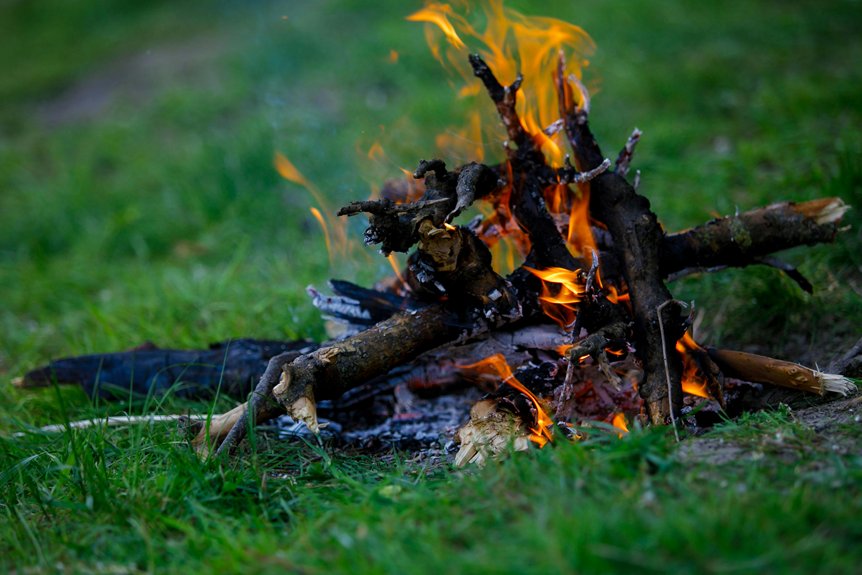
If you’re in an area that allows it, a campfire is another excellent choice. Gather around it for warmth and enjoy the comforting atmosphere it creates.
Don’t forget to bring extra blankets or sleeping bags that retain heat well. Hand warmers are handy too; just slip them into your pockets or sleeping bag for extra warmth.
Staying Dry: The Importance of Waterproof Gear
When you’re out camping, staying dry is just as vital as keeping warm, especially in unpredictable weather. Waterproof gear can make all the difference in your comfort and safety. Invest in a good-quality rain jacket, waterproof pants, and a sturdy tent with a rainfly. These items help keep moisture at bay, preventing you from getting cold and uncomfortable.
Don’t forget about your footwear! Waterproof boots and moisture-wicking socks will keep your feet dry and warm, which is important for maintaining body heat.
Additionally, using waterproof bags for your gear guarantees that your essentials stay safe and dry. By prioritizing waterproof gear, you’ll enhance your camping experience and stay cozy, no matter what Mother Nature throws your way.
Preparing Warm Meals and Drinks
As the sun sets and temperatures drop, preparing warm meals and drinks can transform your camping experience into a cozy retreat.
Start by packing a portable stove or campfire cooking gear, ensuring you can whip up hearty meals. Consider easy-to-cook options like soups, stews, or chili—these not only warm you from the inside but also fill you up.
Don’t forget to bring a thermos for hot beverages; nothing beats sipping warm tea or cocoa while stargazing.
When prepping meals, use insulated containers to keep your food warm longer.
Finally, experiment with spices and herbs; they can elevate simple dishes and make your camping cuisine memorable.
With the right approach, you’ll enjoy delicious warmth amid nature’s chill.
Managing Body Heat and Activity Levels
While enjoying the great outdoors, managing your body heat and activity levels is essential for staying warm during chilly nights.
Keep active! Engaging in light physical activity, like hiking or gathering firewood, generates warmth. Just be careful not to overexert yourself, as sweating can lead to chills. When you need a break, layer up with your warmest clothing to trap heat.
Also, don’t forget about your sleeping setup. Insulate your sleeping bag with a sleeping pad to shield against cold ground. If you wake up feeling too warm, unzip your bag to regulate your temperature.
Finally, consider setting a timer for short, periodic stretches or movements to maintain circulation, ensuring you stay warm and comfortable throughout your camping experience.