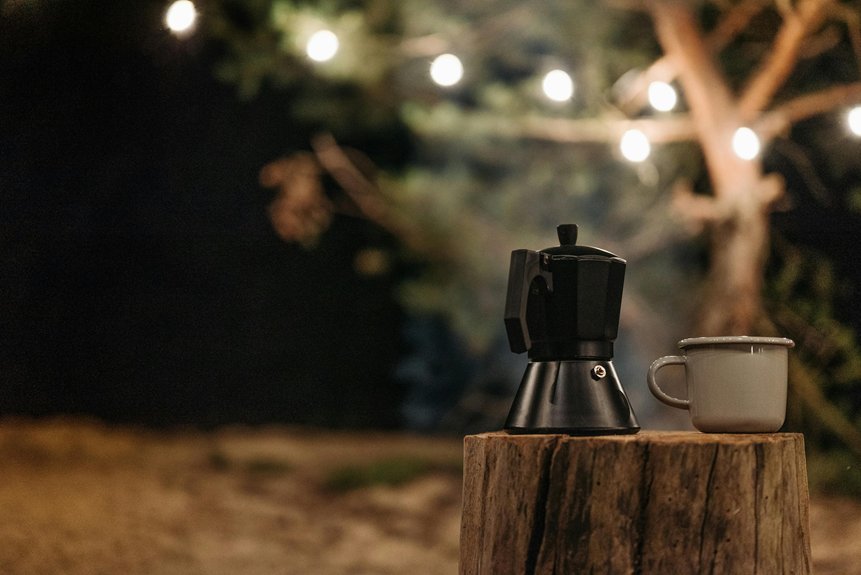
Imagine waking up to the sound of birds chirping, the sun rising over the trees, and the rich aroma of freshly brewed coffee filling the air. Making coffee while camping might seem challenging, but it’s quite simple with the right gear and techniques. From choosing the best coffee beans to perfecting your brewing method, you’ll soon be able to enjoy a warm cup in the great outdoors. Let’s explore how to elevate your camping coffee experience.
Choosing the Right Coffee Gear for Camping
When you’re planning a camping trip, choosing the right coffee gear can make all the difference in your morning routine.
Start by considering portability and weight; you don’t want to lug around heavy equipment. A compact French press or a single-serve pour-over setup can deliver great coffee without taking up much space.
Don’t forget a reliable heat source—whether that’s a camp stove or a portable kettle. Also, think about your water supply; a lightweight water filter can be a lifesaver. Additionally, consider bringing a portable alarm to enhance your safety while enjoying your coffee in the great outdoors.
Finally, pack a sturdy coffee mug that’s easy to clean. With the right gear, you’ll enjoy a delicious cup of coffee while soaking in the beauty of nature, setting the perfect tone for your day ahead.
Selecting the Perfect Coffee Beans
Finding the right coffee beans can truly elevate your camping coffee experience. Start by considering your taste preferences—do you enjoy a bold, rich flavor or something lighter and fruity?
Look for freshly roasted beans, ideally sourced from local roasters or specialty shops. Choose whole beans over pre-ground for maximum freshness, as they’ll retain their flavor longer.
For camping, consider beans with a medium roast; they strike a balance between acidity and richness, making them versatile for various brewing methods.
If you’re adventurous, try single-origin beans for unique flavor profiles. Finally, pay attention to the roast date—beans are best consumed within weeks of roasting for peak taste.
Selecting the perfect beans sets the stage for your outdoor brewing adventure!
Grinding Your Coffee
Once you’ve chosen the perfect coffee beans, the next step is grinding them to release their full flavor potential.
For the best taste, aim for a medium grind, which works well for most brewing methods. If you’ve got a manual grinder, simply twist the handle to achieve your desired consistency.
Electric grinders are quicker but can generate heat, which might affect flavor, so pulse in short bursts. If you’re camping, consider a portable hand grinder for convenience.
Remember, grind only what you need for each brew to keep the coffee fresh. Finally, be sure to store any leftover grounds in an airtight container to preserve their aroma and flavor until your next cup.
Happy grinding!
Boiling Water: Methods for Camping
Boiling water is essential for brewing coffee while camping, and you’ve got several methods at your disposal to get the job done efficiently.
First, if you have a portable camping stove, simply fill a pot with water and place it on the burner until it reaches a boil.
Alternatively, you can use a campfire. Just set a pot over the flames, but make sure to monitor it closely to prevent burning.
If you’re looking for a lightweight option, consider a collapsible kettle; it heats quickly and packs away easily.
Finally, if you want to go old-school, you can heat water in a metal cup directly over the fire. Just remember to keep an eye on it!
Brewing Techniques: French Press, Pour Over, and More
When it comes to brewing coffee while camping, mastering a few simple techniques can elevate your morning experience in the great outdoors.
The French press is a popular choice; just add coarsely ground coffee, pour in hot water, and let it steep for about four minutes. Then, press the plunger down slowly for a rich brew.
If you prefer a pour-over, place a filter in your dripper, add coffee grounds, and pour hot water in a circular motion. This method gives you great control over the extraction.
For a quick option, try instant coffee—just mix it with hot water.
Whichever method you choose, enjoy the ritual of brewing while soaking in nature’s beauty. Happy camping!
Measuring Coffee and Water Ratios
Getting the coffee-to-water ratio just right can greatly enhance your camping brew. For a standard cup, aim for one to two tablespoons of ground coffee per six ounces of water. If you prefer a stronger taste, lean toward the higher end. Use a portable scale or measuring spoon to guarantee accuracy, especially in the great outdoors.
Remember that different brewing methods may require slight adjustments. For instance, a French press usually benefits from a coarser grind and a bit more coffee.
Don’t forget to account for the type of coffee you’re using, as some blends are more potent than others. Experiment a little until you find your perfect ratio, and you’ll be savoring that ideal cup under the stars.
Adding Flavor: Milk, Sugar, and Spices
While your camping coffee is brewing, consider how a touch of flavor can elevate your morning cup.
Adding milk can create a creamy texture, making your coffee smoother and more enjoyable. If you prefer sweetness, pack sugar or honey to stir in, enhancing the overall taste.
For those who love a little spice, cinnamon or nutmeg can add warmth and depth. Simply sprinkle a pinch into your brewing coffee or stir it in afterward.
Don’t forget about flavored creamers; they’re a convenient option if you want to save time.
Experiment with these additions to find your perfect blend. Remember, the flavors you choose can transform your camping coffee into a delightful experience amidst nature. Enjoy every sip!
Cleaning Up After Brewing
After you’ve savored your delicious camping coffee, it’s time to tackle the cleanup.
Start by letting any used coffee grounds cool down before disposing of them. If you’re near a campsite, burying them is often the best option to minimize impact.
Next, rinse out your coffee pot or French press with water to remove residue. If you used a filter, dispose of it properly, too.
For stubborn stains, a little soap and a scrubber will do the trick. Make certain to rinse thoroughly to avoid leaving any soap behind.
Finally, dry all your equipment before packing it away. Keeping your gear clean not only guarantees great coffee for your next brew but also helps preserve the beauty of nature around you.
Tips for Enjoying Coffee in Nature
As you sip your freshly brewed coffee in the great outdoors, taking a moment to appreciate your surroundings can elevate the experience.
Find a comfortable spot to sit, whether it’s a cozy log or a camping chair, and immerse yourself in nature.
Listen to the sounds around you—the rustling leaves, chirping birds, and bubbling streams.
Consider pairing your coffee with a light snack, like trail mix or a granola bar, to enhance the flavor.
If it’s chilly, wrap your hands around the warm cup to enjoy its heat.
Don’t forget to share this moment with friends or family; conversation can make the coffee taste even better.
Troubleshooting Common Camping Coffee Issues
What do you do when your camping coffee doesn’t turn out as expected?
First, check your water temperature; if it’s too hot, it can over-extract and taste bitter. Aim for 195°F to 205°F.
If your coffee’s weak, try using a coarser grind or increasing the coffee-to-water ratio.
For overly strong coffee, dilute it with hot water or add a splash of milk.
If you’re dealing with sediment, consider using a coffee filter or switching to a French press.
Finally, if your brew’s lacking flavor, experiment with different beans or brewing methods.